Best Time to Visit Milford Sound: Rain, Road, Light and Penguins
Milford Sound works in every month, each in its own way. It rains in every month, and rain is what makes the waterfalls. What changes through the year is the road, the crowds, the light and the wildlife. This guide takes each in turn, so you can pick a Milford Sound day tour to suit you.
Can you visit Milford Sound in any month?
Yes. The NIWA normals for the airstrip show at least 12 rain days in every month, and 6,545 mm of rain a year. So there is no dry season to wait for, and no month when the boats stop.
What you can choose is the trade. Summer gives you warmth and long days with crowds. Winter gives you quiet roads, with snow and chains. Spring gives you penguins, and autumn a calmer road. Decide which trade suits you, and the month follows. The rest of this guide explains each.
Why can a wet day be the best day?
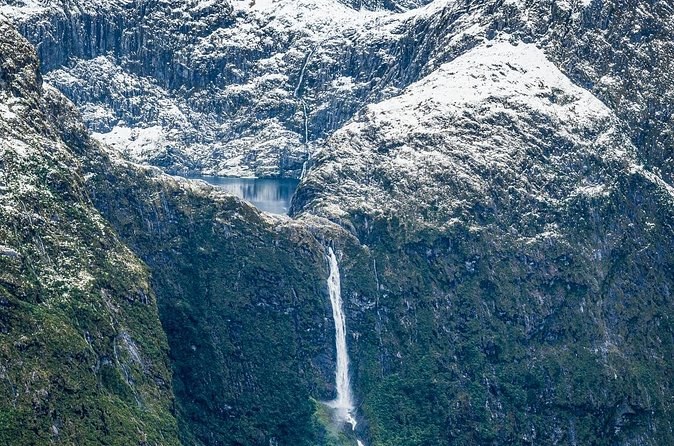
Because rain fills the falls. On a dry day only the permanent falls run, such as Lady Bowen Falls and Stirling Falls. After heavy rain, short-lived falls pour off every wall.
Travellers say so. Kimberley_J found a bit of rain perfect to get the waterfalls flowing. Linda B. had rain and cloud and a moody atmosphere with plenty of falls. Alica, after two dry days, saw hardly any. Bring a waterproof jacket and go anyway.
So if the forecast is for rain, keep your booking. If it is for a dry spell after days of sun, expect fewer falls and clearer views of the peaks. Either way the cruise goes; only a flight waits for the weather.
What is summer like?
December to February is the warmest time, with average highs near 20° in February, and the fewest rain days, also in February. It is also the busiest. The small boats and 15-seat vans fill first, and DOC warns of waits of up to 20 minutes at the tunnel lights in the summer peak.
To enjoy summer, book early and sail early or late. Our guide to beating the crowds explains the timing.
What is autumn like?
March to May is cooler and quieter. Rain stays high: May is one of the wetter months, with about 645 mm. The road is open, and the mornings get colder.
It is a good season for a Te Anau day or a drive, with fewer coaches on the road. You can take the stops at your own pace and still find a parking space. By May, DOC's winter driving advice starts to apply, and autumn has about as much rain as summer by the normals, so pack for it.
What is winter like?
DOC counts winter on this road as May to September. The road can be covered in snow and ice, chains may be needed, and it closes for avalanche control on some days. DOC also notes that traffic numbers are low, and advises leaving later in the morning, from 9am.
Winter is also the driest season by the normals, with 1,365 mm, and the coldest: July averages a low of 1.6°. Snow on the peaks makes the fiord look different. A tour takes the chains off your hands; compare Milford Sound tours from Te Anau.
What is spring like?
September to November brings the most rain days of any season, which keeps the falls running. DOC's winter driving season runs to September, so check the road before you set out.
Spring suits a small boat, which gives you the best chance of seeing wildlife near the rocks, and a waterproof jacket, which you will use. Spring is also the heart of the penguin season. The Fiordland crested penguin, or tawaki, breeds from July to November, and DOC says that is the best time to see one.
When are the penguins there?
From July to November, the tawaki breeding season. That is when a sighting from the boat is most likely, though no cruise can promise one. A smaller boat that can nose in close to the rocks gives you the best chance; Sergio's captain did just that.
Fur seals are common, and bottlenose dolphins visit at times. What lives in the fiord is described on our wildlife guide.
When do flights and cruises cancel?
Cruises rarely. Several operators state that they run in all weather, and the boats sail in rain and wind. The road can close for snow or a slip, and then a road day is moved or refunded.
Flights cancel more often, because pilots need clear air over the peaks. On one helicopter flight, Paul F. found cloud ruled out the glacier, so the pilot landed at a lake and on a beach. If you plan to fly, book early in your trip and keep a spare day. Check the forecast the evening before, and ask the operator whether a road day is an option if the cloud stays low.
What time of day is best?
Early or late. The coaches from Queenstown arrive around the middle of the day, so a morning or late-afternoon sailing is quieter. The weather decides the light, so a flexible day helps more than a fixed hour.
If you drive, an early start also gets you a nearer parking space. In winter, balance that against DOC's advice to leave Te Anau from 9am.
Is winter worth it?
If you like quiet and snow, yes. You share the road with fewer cars, the peaks are white, and the boats still sail. What you give up is warmth and certainty: the road closes for avalanche control on about eight days a year, mostly in winter.
If you drive, carry chains when the signs say so, leave Te Anau from 9am, and check the road status the evening before. If you would rather not, book a road day: the operator watches the road for you, and moves or refunds you if it closes.
How far ahead should you book?
In summer, as soon as your dates are fixed. The small boats and the 15-seat vans fill first. Almost every day tour here refunds you in full up to 24 hours ahead, so you lose nothing by booking early.
In winter you can often book a few days out. The overnight cruises are the exception in any season: both are non-refundable, so book them only when you are sure, and buy cover for weather and road closures.
What should you pack in each season?
- All year: a waterproof jacket, warm layers and insect repellent. The deck is cold and wet even in sunshine.
- Summer: sunscreen and a hat as well, and food, because there are few places to buy it.
- Autumn and spring: a hat and gloves for the boat, and a flask.
- Winter: chains if you drive, boots with grip, and more layers than you think you need.
How do the seasons compare?
Here is the year in one table. Rain is from the NIWA 1991-2020 normals for the airstrip.
| Season | Months | Rain | Road | Crowds | Wildlife |
|---|---|---|---|---|---|
| Summer | Dec, Jan, Feb | 1,719 mm on 46 days | Open; tunnel lights in the peak | Busiest | Seals; dolphins at times |
| Autumn | Mar, Apr, May | 1,745 mm on 43 days | Winter conditions from May | Between the two | Seals; dolphins at times |
| Winter | Jun, Jul, Aug | 1,365 mm on 45 days | Snow, ice, chains; avalanche closures | Quietest, by DOC's account | Penguins breed from July |
| Spring | Sep, Oct, Nov | 1,716 mm on 50 days | Winter conditions to September | Between the two | Penguins breed to November |
Check the nature-guide cruise from $116
What is each month like?
The monthly normals, for anyone choosing a date. Temperatures are average daily highs and lows in degrees Celsius. The full picture is on our weather page.
| Month | High | Low | Rain (mm) | Rain days |
|---|---|---|---|---|
| January | 19.5 | 10.7 | 667 | 16.3 |
| February | 20.0 | 10.7 | 467 | 12.8 |
| March | 18.5 | 9.2 | 571 | 14.4 |
| April | 15.9 | 7.0 | 528 | 13.3 |
| May | 12.5 | 4.9 | 645 | 15.6 |
| June | 9.3 | 2.3 | 440 | 14.6 |
| July | 9.2 | 1.6 | 468 | 14.4 |
| August | 11.2 | 2.7 | 457 | 16.0 |
| September | 13.2 | 4.1 | 541 | 17.6 |
| October | 15.0 | 5.8 | 617 | 17.6 |
| November | 16.4 | 7.6 | 558 | 15.3 |
| December | 18.5 | 9.7 | 585 | 16.9 |
January is the wettest month and June the driest. February is the warmest, and July the coldest. The spread between the wettest and driest months is smaller than most visitors expect, so choose your month for the road, the crowds and the wildlife, and let the rain take care of the waterfalls.
Frequently asked questions
What is the best month to visit Milford Sound?
Is summer the best time to visit?
Is it worth visiting in winter?
Is it worth going in the rain?
Will I see penguins?
Do cruises cancel in bad weather?
What is the best time of day to cruise?
Do I need to book in advance?
Tours for any season
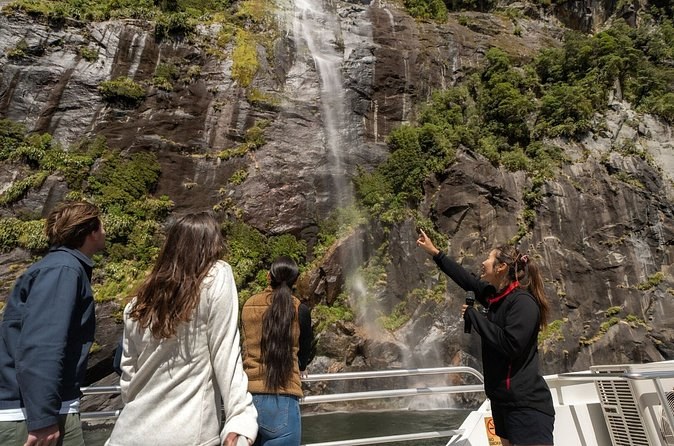
Milford Sound Cruise with Live Nature Guide and Hot Drinks
Up to two hours and fifteen minutes on the water with a nature guide on board, a commentary app in several languages, and free tea and coffee.
From $116 per person
Check Availability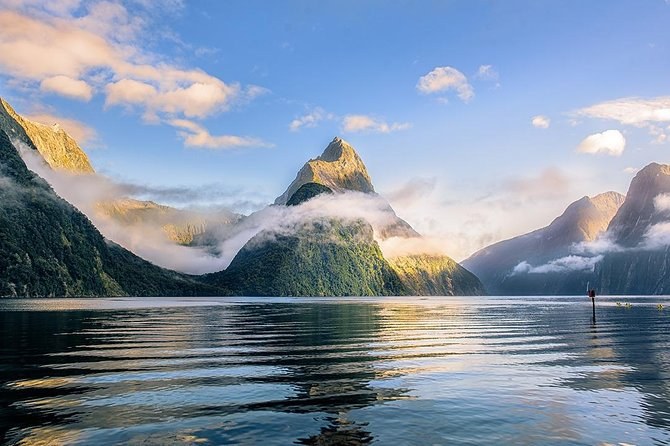
Premium Milford Sound Tour, Cruise & Lunch from Te Anau
A small group of 15 at most from Te Anau: a boutique cruise, lunch, snacks and water, with a booster seat for children.
From $174 per person
Check Availability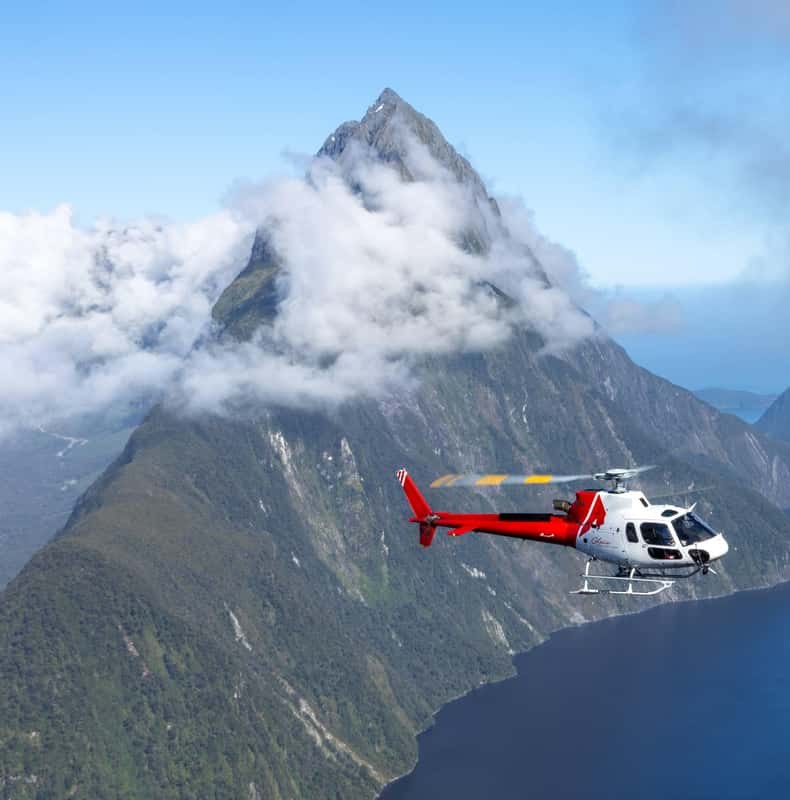
Queenstown: Milford Sound Cruise & Helicopter Alpine Tour
A four-hour Queenstown day by helicopter, with a glacier landing, in-flight commentary and a scenic cruise between the flights.
From $801 per person
Check AvailabilityNext: Pick your tour with our ranking of the best tours. Every tour sits side by side on Milford Sound Tours.